
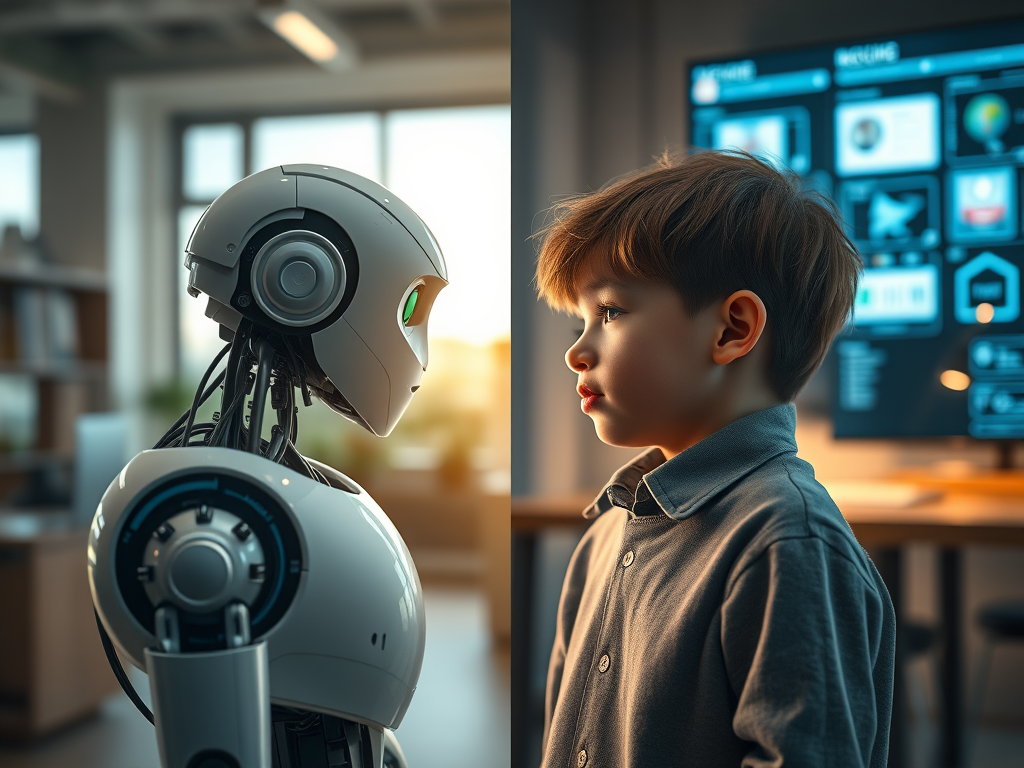
Playful Beginnings – First Encounters with AI
AI in Everyday Life, the Workplace, and Education began with playful questions about world events and history. Many were skeptical, found mistakes, discovered incorrect answers. At the same time, it became clear: in IT coding and medical analysis, AI already delivers surprisingly good results.
Technology in Transition
AI is still young, but it will change our world. When the first car appeared over 100 years ago, you had to start it with a crank. Today, a button press is enough. AI will transform our world – and it will not take 100 years.
Copilot as Search Engine
At first, I used Copilot like a search engine. The answers were technically sound, I could express objections, clarify my needs – and in the end, the decision was mine. The support was effective, a real help.
Efficiency in Everyday Life
What used to take an hour now takes minutes. Writing emails, recipes, organization – AI makes everyday life more efficient. It is a tool that saves time and energy.
Limits of AI
Naturally, there are mistakes. In complex matters, the answers were wrong. Human intelligence – differentiation, context, judgment – remains indispensable. Still, AI’s input was often helpful.
Mirror of Humanity
AI learns from us – the right things and the wrong things. The real danger lies less in incorrect answers and more in the illusion of closeness. AI cannot feel empathy, even if it imitates polite language. Vigilance is needed here.
Changing the World of Work
AI will drastically change how we work. The obstacle is not technology but human habits. Resistance will slow adoption, but change is inevitable.
New Fields for Humans
As routines disappear, new fields emerge: ethics, maintenance, creativity. Humans will be needed to guide the right questions and bring empathy where machines cannot.
AI as a Complement
AI is not a substitute for human intelligence, but a complement. It helps in everyday life, medicine, and the workplace. Ultimately, it is up to us how we use it.
Between Job Loss and Meaningful Work
The biggest question is what happens to our jobs. Some will disappear, others remain. AI should be seen as help for humanity, used for the greater good.
Rethinking School
AI could become a gamechanger for education. It can tailor tasks to each child’s abilities, support gifted children, and ease pressure on teachers and parents. The teacher remains the guide.
STEM and Beyond
STEM subjects are ideal for AI. Math problems can be tailored to each child. AI explains repeatedly and from different angles. Teachers observe and guide.
Time for What Matters
The time gained through AI should be used for nature, art, and movement. AI is a tool that makes life freer and more joyful.
From Antiquity to AI
Antiquity formulated the ideal: truth, beauty, goodness. AI expands this aspiration into the future. If AI serves truth, beauty, and goodness, it is not a threat but a continuation of human culture.
Voices from Philosophy
Sanskrit: Lokāḥ samastāḥ sukhino bhavantu – May all beings live in happiness and harmony.
Tamil: Arivai nanku panpaṭuttināl atu vāḻvai uyarttum – When knowledge is used wisely, it elevates life.
Albert Einstein: “The source of all technical achievements is divine curiosity.”
Birgit Recki: “Technology as a form of freedom – reflections on human culture.”
Is AI the Gateway to Freedom?
AI is a tool that helps people do what they truly love. Maybe this is the beginning of genuine fulfillment.