
No Nature No Humanity
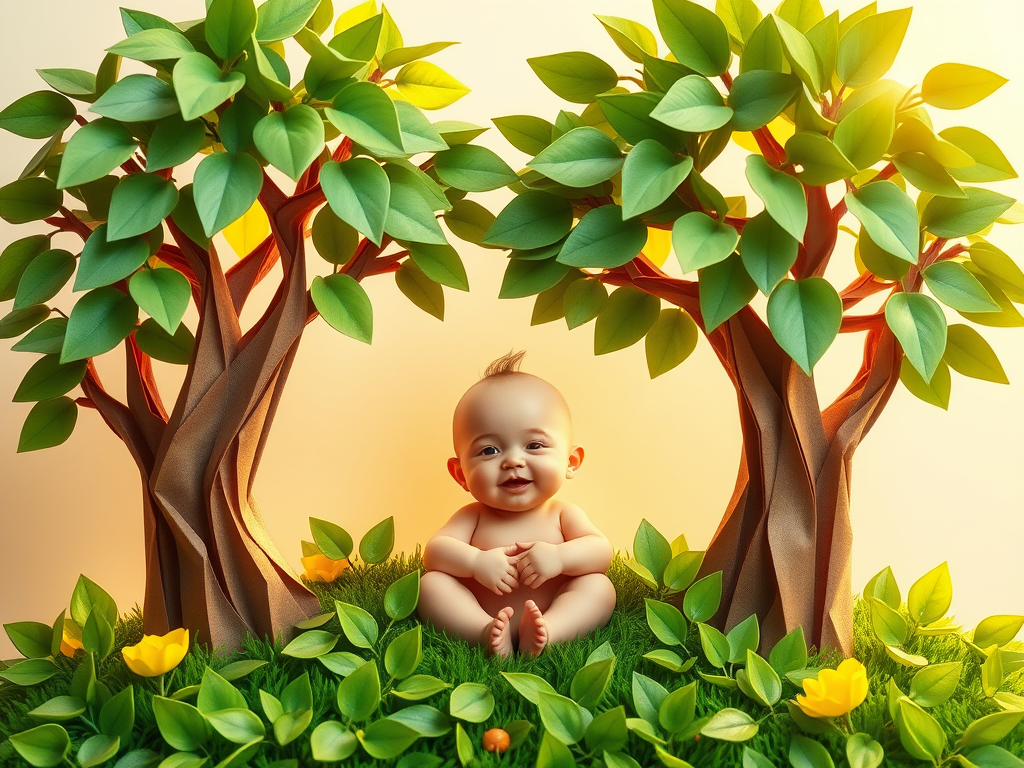
Our relationship with nature is vital for survival. Humans are part of nature and depend on it to live. The beauty of nature, animals, and rivers relaxes us; many would not want to miss a single day of experiencing it. This is why environmental protection matters, and no one wants a world without the lush green of nature. But for decades, environmentalism has been shaped by renunciation: less consumption, less mobility, less meat. Yet a society without creative power loses its courage. Those who see humans only as a disruptive factor will not win them for saving the planet. We do not need a new catalogue of prohibitions. We need a positive impulse that affirms life and loves nature. My vision is: “One Baby, Two Trees.”
The Tree as a Source of Life
Among all the things nature offers, the tree is one of the most essential pillars of life. It is not merely a carbon store. With its strong roots, it holds the soil together. It represents quality of life, aesthetics, and medicine. Trees act like natural air conditioners in our cities, providing shade and protection from rain. Their essential oils have been proven to strengthen our immune system. A walk in the forest is healthy. It is balm for mood and soul. A healthy natural environment is the foundation for a happy life.
The Baby as a Source of Life
Just like the tree, the baby — the birth of a human being — is a source of life for humanity. Every birth is celebrated. People change their lives, reorganize themselves. A baby is a new beginning, a responsibility, a new life that inspires everyone. A baby is a prerequisite for a family and the guarantee for the continuation of humankind.
The Shared Source of Life
The idea is simple: for every newborn child, the UN plants two trees worldwide. Childless individuals who support this idea should also have a tree planted for them. This way, every human being receives a green representative. Human life connects with the natural tree. In our image-driven modern world, everyone can track their tree on their phone through blockchain and satellite technology. The digital image of the growing tree becomes a companion to one’s own biography. The newborn baby grows into an adult — and with it the tree, its branches, and its shoots.
Protecting the Source of Life: A Task for the Global Community (UN)
“One Baby, Two Trees” can be a way to improve the climate and protect the environment. Since nature is globally interconnected and knows no borders, this task is best placed in the hands of the world community. The atmosphere is a global common good. Therefore, the response must also be global. This is the moment for the United Nations (UN). The UN can manage this project beyond national fragmentation. It would give the UN a meaningful, measurable mission. And the costs of this enormous project are relatively low compared to many other budgets. Reforestation for every human being would be a visible, meaningful, and effective environmental measure. Central coordination by the UN would cut through the thicket of national bureaucracies. It would be an administrative liberation for the planet.
A “Tree Guarantee” would visibly honor this contribution. We could complement traditional child benefits with an “Earth Endowment.” Instead of merely managing money, we invest directly in the child’s foundation of life. Nature becomes the most valuable dowry for every new life. Every birth becomes a measurable success for the planet.
The Heritage of Humanity: A Global Reconnection
This idea is deeply rooted in the DNA of our civilization. In India, the Rigveda has taught for thousands of years: “The Earth is our mother, and we are her children.” This deep reverence runs through all major faiths. In Christianity, humans are called to be “cultivators and guardians.” Judaism celebrates Tu BiShvat, the New Year of the Trees, and the Talmud reminds us: “Whoever plants a tree has cared for the world.” In Islam, planting a tree is considered a continuous charity (Sadaqa Jariyah) that outlives one’s own life. In many African cultures, it is a spiritual act of honoring ancestors.
This universal wisdom shows us: trees are far more than nature — they are culture, spirituality, and our shared future. In a world lost in technocratic debates, this appreciation is a global task. It is a return to a reverence for life that we should never have forgotten.
From Renunciation to Creation
We must stop viewing humans as enemies of nature. “One Baby, Two Trees” turns us into gardeners of the planet. It replaces the rhetoric of guilt with the practice of responsibility and the joy of a flourishing environment. Those who plant trees honor the past, improve the health of the present, and shape the global future. It is time for a policy that does not end with local “less,” but begins with global “action.” A simple, worldwide promise for every life: roots for a healthy, happy world.
Every birth contributes to climate neutrality through the planting of trees.
Every new life becomes a visible contribution to the future of the planet.
One Baby, Two Trees.
Further Reading & Exploration
- UNEP: Planting trees has never been easier! The official UN press release about the app that enables global tree planting with a single click.
- ETH Zurich: How Trees Could Save the Climate The scientific foundation: a study by ETH Zurich on the potential of global reforestation.
- Nature: The Biophilia Effect and Our Health Why nature is more than environmental protection — a scientific analysis in the journal Nature.
- Cauvery Calling: A Movement to Save the Rivers A practical example from India showing how ecological restoration can succeed on a large scale.
- Blockchain for Climate Foundation How modern technology and blockchain help achieve climate goals transparently and securely.