
The Moment That Remains
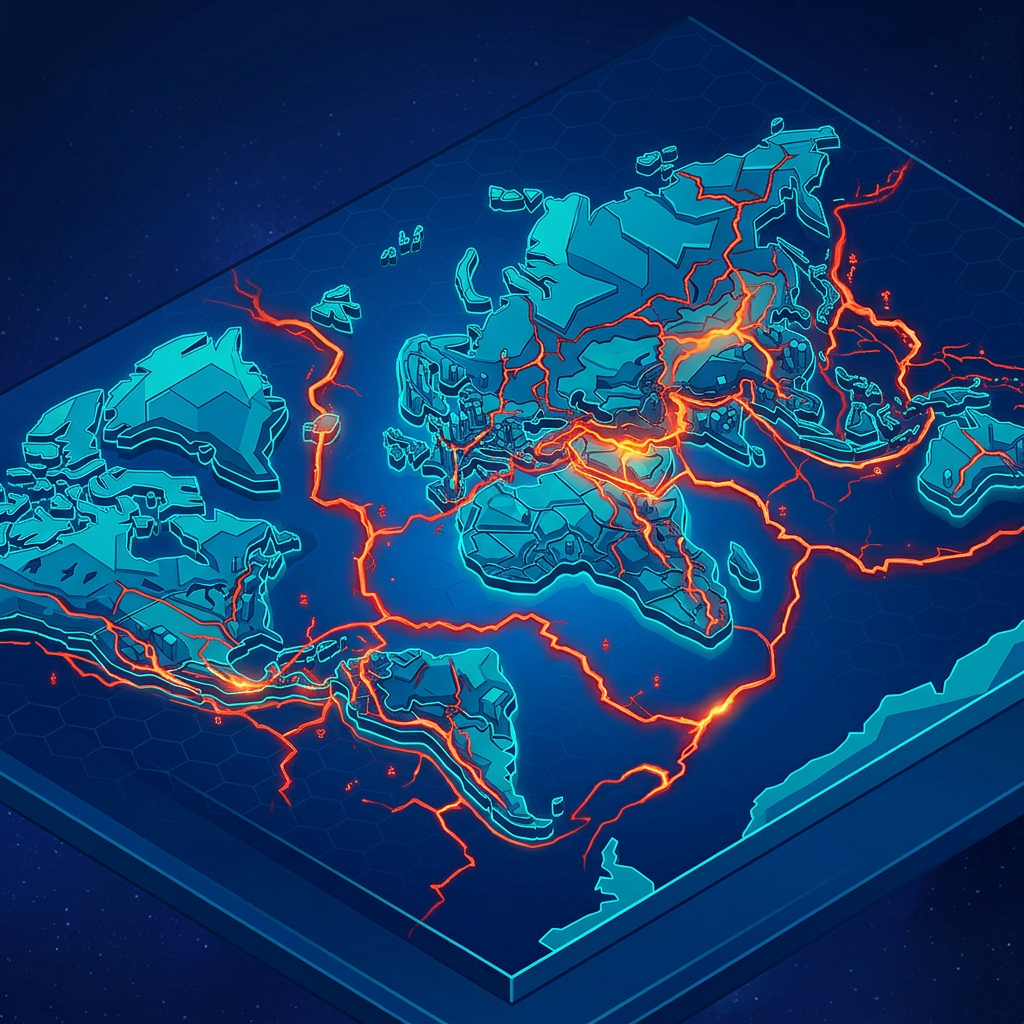
Today, after publishing my first column on Tolstoy’s War and Peace in the context of the Russia–Ukraine war, the real events began unfolding faster than anyone could meaningfully interpret. Moreover, it felt as if the thoughts themselves had become heavier than the pages. In addition, we no longer face a single conflict but two major wars in which two global powers act as the primary players. As a result, war and peace appear not as opposites but as two states of the same world. Consequently, the coin never stops turning, and the average person must ask what this coin ultimately means for them. Ultimately, the question of position becomes a question of survival.
The war in Ukraine, the conflict in the Middle East, and rising tensions in the Indo‑Pacific are not isolated events. Moreover, they are symptoms of a world order that no longer exists in the form we once knew. In addition, history rarely tilts in a single moment; instead, it tilts when many small steps can no longer be reversed. Consequently, habits, illusions, and political routines overlap until reality catches up with them. Ultimately, the present moment is a convergence of accumulated misreadings.
Rereading War and Peace
Ray Dalio describes how all empires follow the same patterns of rise and decline. Moreover, we are living precisely in that transitional space. In addition, the United States appears late‑cycle, China rises as a new actor, Russia is in decline, India is ascending, Europe remains fragmented, and Iran pursues ambitious goals. As a result, this transitional phase becomes chaotic, dangerous, and inevitable. Consequently, the new unrest is not accidental but structural. Ultimately, it is the result of a world losing its order and rearranging its centers of power.
The new unrest is not accidental; it is the result of a world losing its order and rearranging its centers of power. Furthermore, the Iran–Israel conflict is not merely a regional war but a symptom of a global shift in power. In addition, just as 1918 was not the end of the First World War but the beginning of three years of chaos in Eastern Europe, today’s events echo that same pattern. Consequently, Prit Buttar’s descriptions of nationalism, revenge, power vacuums, and countless local wars feel eerily familiar. Ultimately, we witness similar dynamics — only in real time.
A Network of Actors
From a game‑theoretical perspective, we are no longer in a system with two players but in a network of many actors whose moves influence one another. Moreover, the present resembles not one chessboard but ten chessboards operating simultaneously. In addition, every move alters all of them. Consequently, Iran and Israel, the United States and China, Russia and Ukraine, Turkey and the Kurds, China and Taiwan, Saudi Arabia and Iran, states and militias — everything is interconnected. Ultimately, complexity becomes the engine of instability.
A signal sent to one actor is read by all others, and each interprets it differently. Moreover, this is precisely the material from which escalations emerge. In addition, Tolstoy would argue that history is not made by great men but by countless small decisions. Consequently, today’s decisions take the form of drone strikes, sanctions, proxy operations, cyberattacks, and misunderstandings. Ultimately, the world is not dangerous because it is evil; it is dangerous because it is crowded with actors who misread one another.
Buttar shows how, after 1918, armies dissolved, militias emerged, borders blurred, and identities were reinvented. Moreover, he describes officers who woke up in a world where their army existed one day and no longer existed the next. In addition, this mechanism is timeless. Consequently, when order collapses, peace does not emerge; instead, a vacuum emerges. Ultimately, vacuum is the natural enemy of stability.
Fear, Morality, and Old Philosophies
Philosophically, we are witnessing a return to very old questions. Moreover, Kant believed in a world where peace arises from law, treaties, reason, and shared rules. In addition, Hobbes describes a world in which security always comes first. Consequently, whenever people or states feel threatened, they act not out of morality but out of fear. Ultimately, this dynamic shapes modern geopolitics.
This is exactly what we see today. Moreover, states act not because they want to but because they believe they must. In addition, deterrence replaces trust, security replaces values, and power replaces arguments. Consequently, morality remains important, yet it only works when it is protected. Ultimately, fear replaces morality today because security has become the new religion — and everyone believes they must defend it.
Modern Warfare and Expanding Frontlines
War is no longer a battlefield one can enter or leave. Moreover, it is a network of drone swarms, cyberattacks, disruptions of navigation systems, artificial intelligence, militias, propaganda, and information warfare. In addition, the battlefields have multiplied. Consequently, the front runs not only between armies but also between networks, data streams, power lines, satellites, and infrastructures that sustain daily life. Ultimately, modern conflict is everywhere and nowhere at once.
While all this unfolds, people in wealthy nations feel a new and unfamiliar fear. Moreover, many have grown accustomed to a world that was historically unnaturally stable. In addition, this illusion is now crumbling. Consequently, it feels like the destruction of a dream — or a dream world. Ultimately, prosperity was politically enforced, militarily secured, and geographically favored.
When these pillars begin to shake, everything shakes. Moreover, the average citizen senses this without being able to explain it. In addition, they see rising prices, unstable supply chains, geopolitical tensions, burning tankers, drones over refineries. Consequently, they see a world becoming restless and feel that their lives depend on it, even though they control none of it. Ultimately, anxiety becomes a structural condition.
Geography and the Mechanics of Decline
Geography plays a larger role than many want to admit. Moreover, Caesar wrote extensively about how seasons, nature, and topography determine whether a campaign succeeds or fails. In addition, Buttar shows how rivers, swamps, and plains shaped the Eastern Front. Consequently, the present confirms these mechanics. Ultimately, Ukraine remains unconquerable, Iran is a plateau and labyrinth, and the Strait of Hormuz is a bottleneck capable of strangling the global economy.
Decline does not begin with the fall of a capital or the collapse of a currency. Moreover, it begins when a society stops investing its energy in the future and redirects it toward surviving the present. In addition, high debt, stagnating innovation, and geopolitical overload accelerate this process. Consequently, threatened states shrink their time horizons. Ultimately, they stop thinking in decades and begin thinking in months.
The more resources flow into conflict, the fewer remain for a better future. Moreover, the fewer future perspectives exist, the more conflicts emerge. Consequently, this creates a closed and dangerous cycle. Ultimately, prosperity erodes long before collapse becomes visible.
Strategic Patience: China and India
While Russia and the United States are openly entangled in conflicts and while Europe reacts nervously to every escalation, two emerging world powers appear remarkably calm. Moreover, China and India observe the situation with a composure that many in the West find unsettling. In addition, this calm is not a sign of indifference but a mixture of strategic patience and historical experience. Consequently, their silence becomes a form of power. Ultimately, they understand that wars rarely produce winners.
China thinks in long timeframes — not in election cycles but in centuries. Moreover, India thinks in civilizational arcs rather than alliance structures. In addition, both nations have learned that great powers rise not through impulsive decisions but through the careful exploitation of others’ mistakes. Consequently, their patience is strategic, not passive. Ultimately, it is the calm of civilizations that have seen centuries of conflict.
The Desire for a Different Future
When one reads these old texts closely, one feels that everything repeats and that the future awaiting us has already been described. Moreover, I do not want us to repeat all the same mistakes. In addition, as an average person, I lack the solution — a way out, a future that is good for everyone. Consequently, peace becomes not only a hope but a necessity. Ultimately, the hope remains that the coin will someday turn back to the right side — peace.
Further Reading:
[1] Prit Buttar – Retribution: The Soviet Reconquest of Western Ukraine, 1943–44
Osprey Publishing, 2019 · ISBN 978‑1‑4728‑3532‑1 · Softcover, 472 pages.
https://ospreypublishing.com/us/retribution-9781472835321/
[2] Ray Dalio – The Changing World Order: Why Nations Succeed and Fail
FinanzBuch Verlag, 2022 · ISBN 978‑3‑95972‑407‑4.
https://www.finanzbuchverlag.de/buch/weltordnung-im-wandel/9783959724074