
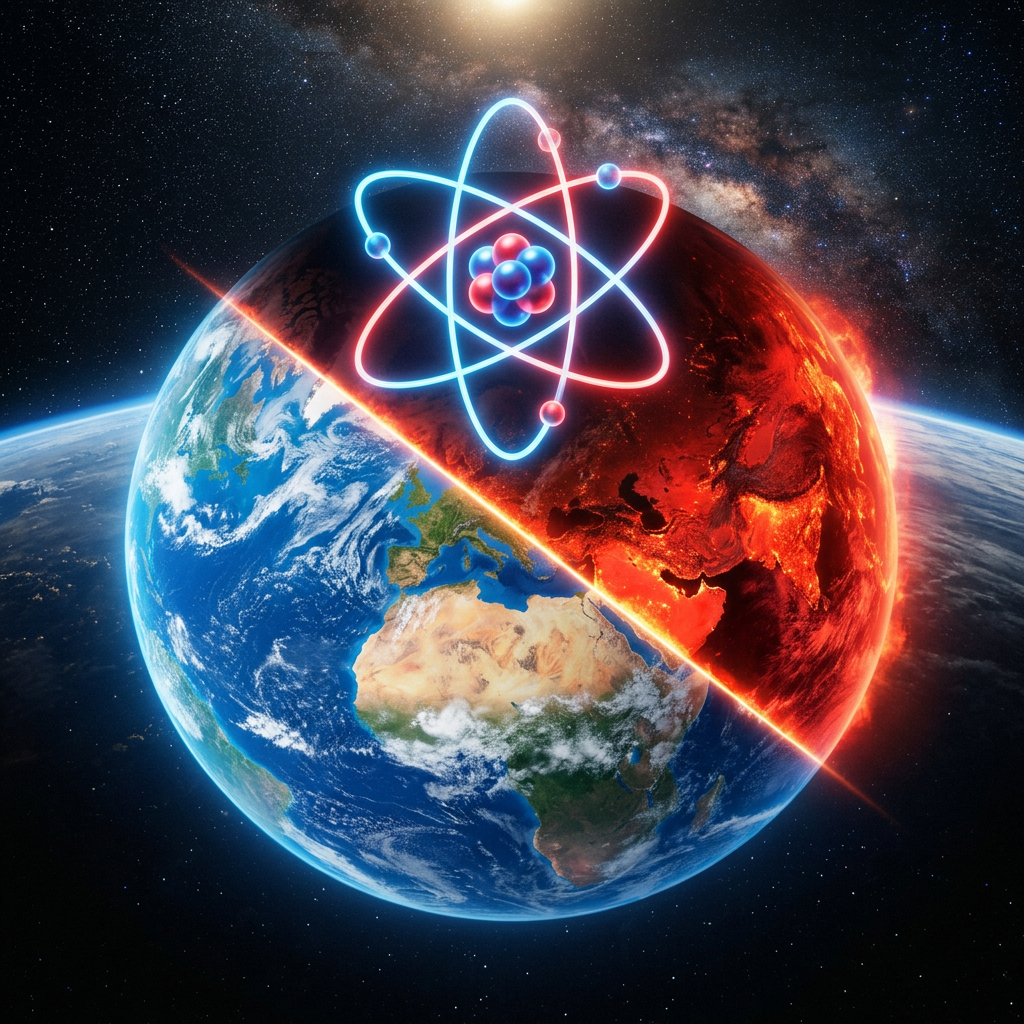
The Moment That Remains
Today, my encounter with Joseph Rotblat in the summer of 2001 in Oxford remains one of those moments that grow larger with time. Moreover, although I was not a witness to the era he described, his words carried a weight that exceeded the moment in which they were spoken. In addition, the meeting occurred only weeks before the world shifted into a new age on September 11. As a result, his reflections felt less like memories and more like warnings. Consequently, Rotblat’s presence revealed how deeply moral clarity can shape scientific responsibility. Ultimately, the encounter became a reference point for understanding nuclear deterrence.
Rotblat knew the bomb from the inside and rejected it nonetheless. Furthermore, he left the Manhattan Project when he realized that the bomb was no longer aimed at Hitler but at the world itself. Therefore, he later received the Nobel Peace Prize because he understood that the only safe nuclear weapon is the one that does not exist.[1] Ultimately, his decision remains one of the clearest moral acts in the history of modern science.
War as Power, Not Morality
A reader once reminded me that war is not automatically a moral mirror. Moreover, many wars arise because someone wants more. In addition, war often becomes action rather than reaction: expansion, ambition, and the old pattern of taking what one desires. Consequently, conflict frequently reveals power rather than justice. Ultimately, this perspective reframes how nuclear deterrence must be understood.
Therefore, the moral burden of nuclear deterrence begins here: What does it mean when a tool of conquest becomes a tool of annihilation, and when annihilation becomes a tool of stability? Furthermore, this question exposes the paradox at the heart of nuclear strategy. Ultimately, deterrence is built on fear, not virtue.
The Birth of Nuclear Deterrence
The history of nuclear deterrence begins with two cities tied to human tragedy: Hiroshima on August 6, 1945, and Nagasaki three days later. Moreover, two explosions killed tens of thousands within seconds and many more by the end of the year. In addition, these events revealed the scale of destruction that would define the nuclear age. Consequently, the world understood that the abyss was not an accident but a decision.
If Hiroshima was the first abyss, then Nagasaki was the moment the world understood that the abyss was a decision. Furthermore, the only nation that ever used an atomic bomb became the nation that decides who may be a nuclear power. As a result, this asymmetry shaped the foundation of deterrence. Ultimately, the nuclear order was built on unequal moral ground.
The Cold War and the Logic of Fear
After the Second World War, the world lay in ruins. Moreover, the Cold War created an era in which humanity stood at the edge of catastrophe while stabilizing itself through mutually assured destruction. In addition, deterrence worked only because both sides remained rational. Consequently, individuals like Stanislav Petrov or Vasili Arkhipov made decisions that prevented global disaster. Ultimately, human judgment proved more reliable than the systems designed to replace it.
Nuclear deterrence worked, but only because human beings were wiser than the systems they operated. Furthermore, this insight highlights the danger of automated nuclear decision-making. Ultimately, deterrence depends on human restraint, not technological perfection.
The Non‑Proliferation Treaty
The Non‑Proliferation Treaty protects the status quo rather than the world. Moreover, it defines five states as legitimate nuclear powers while forbidding all others from possessing the bomb. In addition, the treaty reflects the geopolitical structure shaped by the victors of the Second World War. Consequently, it became a power cartel rather than a moral principle. Ultimately, the treaty stabilizes inequality rather than justice.
The Architecture of Nuclear Power
The five official nuclear powers are the states that caused the greatest damage. Moreover, they tested nuclear weapons in Japan, Algeria, Polynesia, Australia, and Xinjiang. In addition, the moral order is inverted because those allowed to possess nuclear weapons are the ones that used or tested them most recklessly. Consequently, the legitimacy of nuclear power rests on historical violence. Ultimately, this contradiction shapes global security.
The Unofficial Nuclear Powers
India and Pakistan possess nuclear weapons because they fear each other. Moreover, their security structures differ significantly. In addition, India has stable institutions and a clear chain of command. Meanwhile, Pakistan is politically fragile and heavily influenced by the military. Consequently, the risk of escalation is structurally higher. Ultimately, nuclear danger is shaped by governance, not technology alone.
Israel possesses nuclear weapons unofficially but under stable control. Meanwhile, North Korea holds them as a guarantee of survival. Ultimately, the danger lies not in who has the bomb, but in who believes they must use it.
The Global Paradox
Today, around 12,500 nuclear weapons exist worldwide. Moreover, a mere 100 modern warheads could destabilize the global climate permanently. In addition, humanity possesses enough nuclear weapons to destroy itself multiple times. Consequently, nuclear power remains both excessive and fragile. Ultimately, deterrence is built on a paradox: stability through overwhelming destruction.
The Lost Era of Disarmament
There was a time when disarmament was real. Moreover, treaties were signed, diplomats negotiated, and scientists warned. In addition, the public understood that nuclear weapons symbolized vulnerability rather than strength. However, that era is gone. Consequently, treaties collapsed, modernization accelerated, and awareness declined. Ultimately, the world moved from dismantling nuclear weapons to normalizing them.
The Reinvention of Nuclear Deterrence
The generation of witnesses is dying. Moreover, the peace movement has grown quieter. In addition, popular culture trivializes the bomb because the experience is gone. Consequently, politics speaks again in the language of war. Ultimately, awareness of nuclear danger is fading.
The world has lost its fear of nuclear war, but the bombs retain their danger. Furthermore, when fear disappears, caution disappears as well. Consequently, only the technology remains — cold, ready, available.
As a result, the true danger lies not in deliberate decisions but in mistakes, misunderstandings, or reflexes. Ultimately, we no longer live in a world dismantling nuclear weapons; we live in a world normalizing them.
Further Reading:
[1] Pugwash Conferences on Science and World Affairs – The organization co‑founded by Joseph Rotblat.
https://pugwash.org
↩︎
[2] International Campaign to Abolish Nuclear Weapons (ICAN) – Nobel Peace Prize 2017.
https://icanw.org
↩︎
[3] Bulletin of the Atomic Scientists – The Doomsday Clock.
https://thebulletin.org/doomsday-clock/
↩︎